When something unexpected disrupts your home, your first priority is getting life back to normal. But once the immediate damage has been addressed, another possibility can emerge—this may be an opportunity to make the home work better than it did before. An insurance-related repair can create an unusual moment in the life of a home, when spaces are already being opened up and decisions are already being made. For homeowners who have been considering changes for years, it may be worth asking whether repair or remodel is really the end goal.
First, Understand What Needs to Be Restored
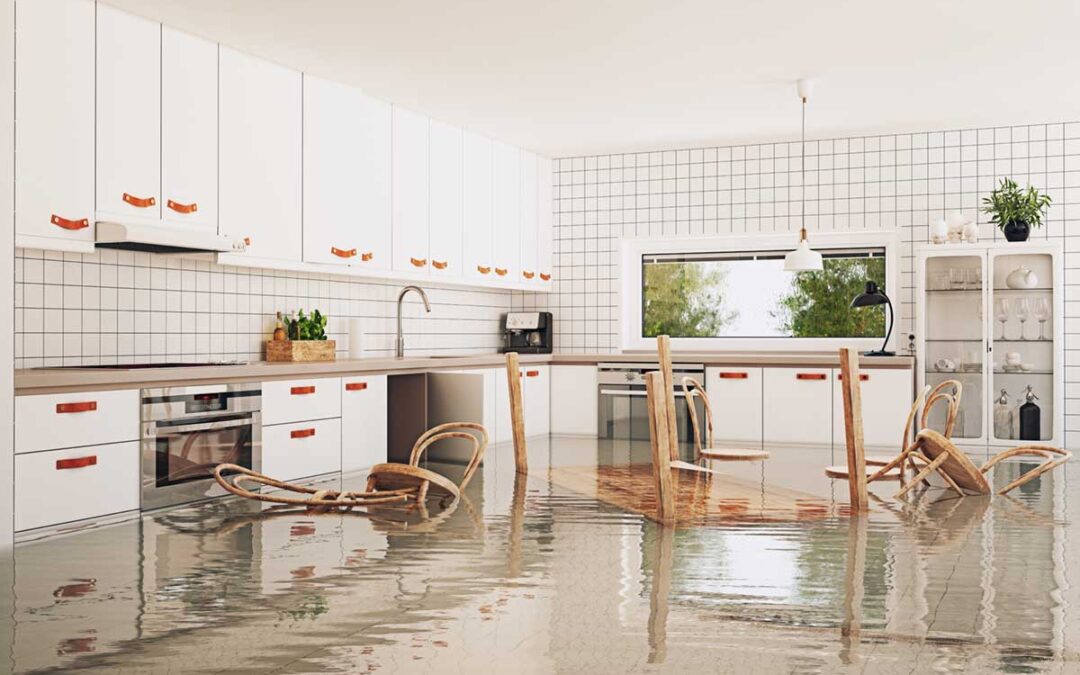
Imagine coming home to discover that a burst pipe has damaged your kitchen floor and lower cabinetry. Or perhaps a storm has destroyed part of the roof and allowed water into the rooms below. A kitchen fire or plumbing failure can create a similar situation. Suddenly, portions of your home need to be removed and rebuilt whether you had planned a project or not.
Common situations that can lead to an insurance-related home repair include water damage, storm or wind damage, plumbing failures, and fire or smoke damage. The extent of the work depends on the specific circumstances of the event and the coverage determined by your insurance carrier.
The insurance carrier determines what is covered under the policy; Schroeder Design Build’s role is different. We help homeowners navigate remodeling projects that begin with an insurance-related repair, understand what the construction project involves, and evaluate what can be done with the space once reconstruction begins. Our focus is on the home itself—how it needs to be rebuilt and whether this unexpected disruption creates an opportunity for something more.
That distinction sets up an important moment of decision: Do you want to simply restore the damaged area or use the opportunity to make changes you’ve been considering for years?
Ask Yourself Whether You Want to Put Everything Back the Same Way
This is often the point when a repair starts to feel like something more. If a section of your kitchen or another important living space has already been demolished, you may have a rare opportunity to reconsider how the room functions.
Before reconstruction moves ahead, ask yourself:
- Does the current layout still work for the way we live?
- Could we improve storage while the space is open?
- Are there circulation problems we’ve learned to live with that could be better?
- Would opening the kitchen to an adjoining space make more sense?
- Are there lighting or electrical improvements we’ve been putting off?
- Will the replacement flooring transition naturally into adjacent rooms?
For example, a water-damaged kitchen floor may initially seem like a straightforward flooring replacement. But once the cabinetry is being removed and portions of the room are open, you may realize that the kitchen footprint has frustrated you for years. Perhaps the island is too small or the traffic pattern has always felt awkward. Instead of completing the same kitchen you had before, you can explore whether a larger remodel makes sense.
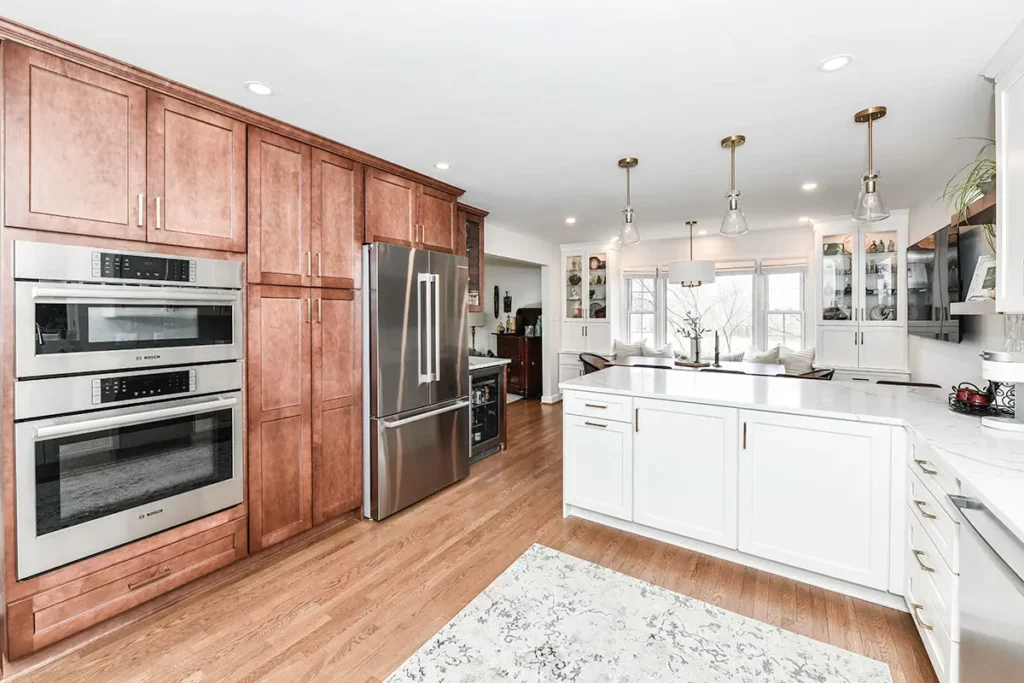
“When a wall or a run of cabinetry has to come out anyway, I ask homeowners the question they weren’t expecting: ‘Now that it’s open, what would you actually change?’” says Nina Carhuaricra, Lead Designer at Schroeder Design Build. “Most people have a mental list of small frustrations with their kitchen or bath: an awkward traffic pattern, not enough counter space, or a window that never got moved. An insurance repair can be the moment those small fixes become possible without adding a whole separate project down the road.”
This is where an insurance claim home remodel can become a much broader conversation about how you want your home to function.
Separate Restoration from the Remodel You Choose to Make
One of the most important steps is understanding the difference between what insurance covers and what the homeowner wants to add.
Think of the project as two separate buckets:
- Covered restoration: The work necessary to repair or replace the portions of the home included in the insurance scope, and
- Homeowner-funded upgrades: The additional work you choose to undertake because you want to change the design, functionality or finish level.
Cabinetry offers a perfect example. If damaged cabinets need to be replaced, insurance may provide for replacement cabinetry necessary to restore the kitchen. If you decide to change the configuration, enlarge the island or select upgraded cabinetry, these choices become part of the additional remodeling scope you are electing to pursue.
Being clear about these two categories can make the process much easier to understand. It also gives you a framework for deciding which improvements are important enough to pursue.

“One of the first things I walk homeowners through is where the insurance scope ends and where their own investment begins,” explains Andrew Schroeder, Owner & CEO of Schroeder Design Build. “Your carrier will cover what’s needed to restore the home to its prior condition—that’s their job. If you want to reconfigure the kitchen or upgrade finishes while the walls are already open, that becomes a separate conversation about budget and priorities. Getting that distinction clear up front saves a lot of confusion later in the project.”
Look Beyond the Immediately Damaged Area
Damage rarely respects the boundaries of a single room. A repair in one area can have a ripple effect on how another part of the home looks or functions.
Flooring is a great example. If kitchen flooring needs to be replaced, matching it to an adjacent hallway or dining space may influence the overall approach. Similarly, replacing cabinetry can reveal layout issues that weren’t obvious when everything was intact.
Opening walls can present another opportunity. Once drywall is removed, your remodeling team may be able to identify outdated wiring or insufficient insulation that could be addressed as part of the broader project.
This broader perspective is one of the advantages of working with a design-build firm like Schroeder Design Build. Rather than treating each part of the project as an isolated repair, the team can consider how the work connects across the home. The goal isn’t to add work simply because the opportunity exists. It’s to recognize where one decision can affect another and make those decisions intentionally.
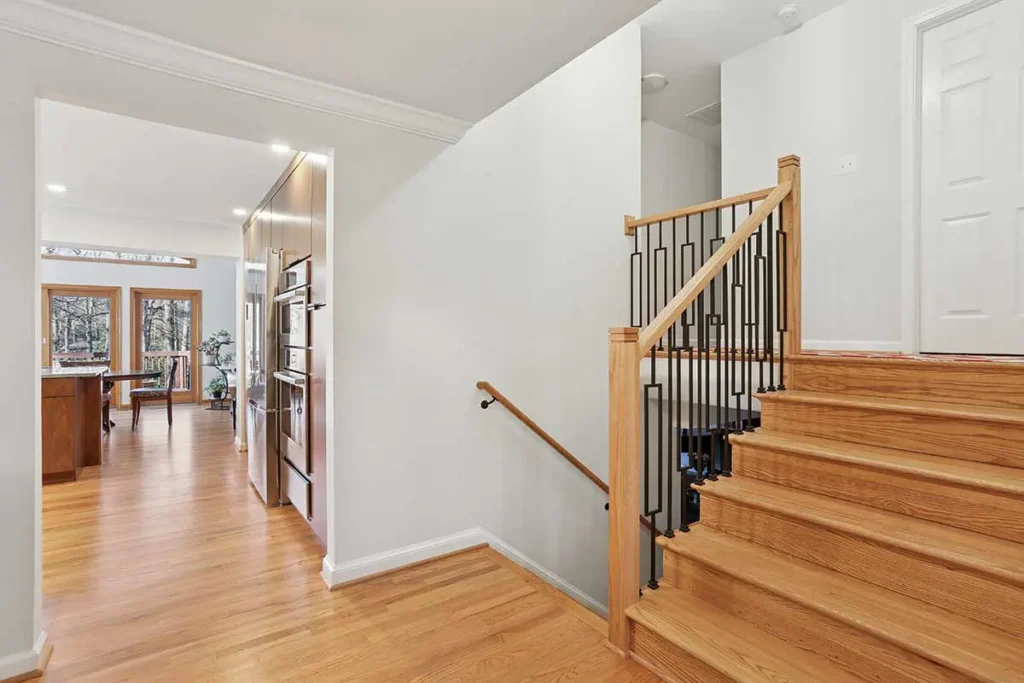
“Damage doesn’t stop at a doorway, and neither should the thinking behind the repair,” Andrew says. “If we’re replacing flooring in the kitchen, I’m already looking at how it ties into the hallway or the dining room. If a wall comes down for drywall repair, that’s often the easiest and least disruptive time to update wiring or add insulation you’d never tackle otherwise. A design-build approach lets us look at the whole picture instead of patching one component at a time.”
Decide Whether Architectural Design Should Be Part of the Project
There is a meaningful difference between restoring a room and redesigning it.
Some homeowners genuinely want to put everything back the way it was. Others find themselves saying, “Since we’re already doing this, we’ve always wanted to change this.” That second statement can signal that the project has evolved beyond restoration.
Architectural/design planning can help determine what is possible before construction begins. Depending on the project, this may involve rethinking the use of the space, considering structural changes or determining whether permits and other approvals are required.
“There’s a real difference between putting a room back the way it was and actually designing it for how a family lives today,” Nina says. “I’ve had homeowners tell me, almost in passing, ‘We’ve always hated this layout’—that’s my cue. If architectural or design planning needs to happen before rebuilding starts, it’s worth pausing to do that right rather than rushing back to normal and regretting it later.”
For a homeowner considering a larger insurance repair kitchen remodel, this pause can be especially valuable. Decisions made during design can influence the project long after the original damage has been forgotten.
Plan the Remodel Before Reconstruction Gets Too Far
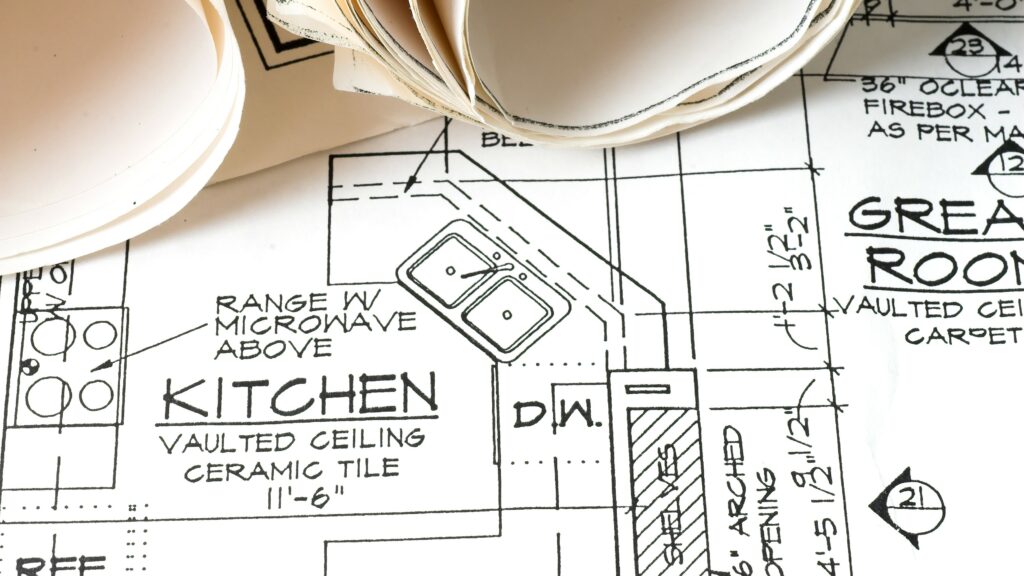
Timing matters. After a major disruption, it’s completely understandable to want everything finished, and you may feel pressure to move quickly. You want your home back. You want your routine back. You want the project behind you.
At the same time, moving too quickly can make it harder to consider changes that could have been incorporated while the work was already underway.
If you are considering remodeling after water damage, for example, decisions about a layout change need to be made before reconstruction reaches certain milestones. Once walls are closed, cabinetry has been ordered or flooring has been installed, changing direction can become more complicated or even unworkable.
Planning early doesn’t necessarily mean expanding the project. It simply gives you time to decide whether you want to restore, remodel or do a combination of both. It is also a practical/cost saving decision and not just a design one, to help prevent the added cost and disruption of making expensive changes after work has already progressed.
Choose the Right Type of Contractor for What You Want to Accomplish
Choosing the right contractor depends on what you actually want to accomplish.
If your goal is straightforward restoration, an insurance restoration specialist may be the appropriate fit. If your project has evolved into redesigning and remodeling the home, a design-build firm is a better choice.
At firms like Schroeder Design Build, an integrated design-build process brings design, budgeting, construction planning and selections together. Rather than completing one portion of the project and then handing the homeowner to an outside specialist, the in-house team can evaluate how design decisions affect the overall scope and budget from the beginning.
“I tell people up front, if all you want is your house put back exactly the way it was, a restoration specialist can do that well, and that’s a perfectly reasonable choice. But if this repair has turned into ‘Let’s finally fix this the right way,’ that’s a different kind of project, and it calls for a team that can handle design, budgeting, and construction together instead of handing you off between specialists,” Andrew advises.
Understanding the difference between home restoration vs. remodel can help you choose a process that matches your goals. You don’t have to remodel simply because an insurance-related repair has created an opportunity. But if you’ve been thinking about changing your home, it may be worth exploring what is possible before reconstruction is too far along.
Schroeder Design Build. Celebrating 40 Years of Expert Remodeling.
Schroeder Design Build is highly experienced in helping homeowners navigate remodeling projects that begin with an insurance-related repair. As a design-build firm serving Northern Virginia for 40 years, we can help you evaluate the existing space, explore design possibilities and understand how the additional work fits into the larger construction plan.
If your insurance-related repair has prompted you to think about making your home function better, contact us to discuss your project and determine whether restoration or a larger remodel makes sense for your home.
Get more remodeling tips through our newsletter.