
Designing a home addition is one of the most impactful ways to invest in your home—and your future. When done thoughtfully, an addition can support lifestyle changes, evolving family needs and long-term comfort without requiring constant renovation. For homeowners considering home addition planning in Northern Virginia, looking beyond immediate needs is the key to creating spaces that stand the test of time.
Think Beyond Square Footage
The most successful home additions aren’t defined by how many square feet they add; they’re defined by how well they support your family over time. A thoughtfully planned addition anticipates change, whether that’s a growing family, a shift to remote work or the desire to age comfortably in place. When homeowners focus only on solving today’s problem, they often find themselves outgrowing the space faster than expected.
Lifestyle shifts are happening more rapidly than ever. Technology continues to reshape how we work and live, multigenerational households are increasingly common, and many homeowners want to stay in their homes longer. Planning your home addition with these realities in mind allows your space to evolve instead of becoming obsolete.
Proactive planning also reduces the need for future remodeling. While reactive renovations address immediate pain points, they can introduce inefficiencies, structural limitations and higher long-term costs. Designing a home addition with flexibility up front creates a smoother, more cost-effective path forward.
As Andrew Schroeder, owner and CEO of Schroeder Design Build in Fairfax, VA explains, “A home addition should feel intentional from day one, but still adaptable enough to evolve as life changes.”
Plan Your Home Addition by Starting With How You Live—Not Just How You Live Now
One of the most important steps in home addition planning is zooming out to consider the next 10-20 years. Life milestones—like children leaving home, parents moving in, career changes or downsizing—can significantly alter how your space is used. Identifying these possibilities early helps guide smarter design decisions.
Rather than designing rooms with rigid, single-purpose functions, homeowners benefit from spaces that can shift over time. A playroom can later become a home office, a guest suite or a main-level bedroom. A second-story addition may serve growing kids today and provide private living space for extended family later.
Avoiding hyper-specific layouts is critical. Built-in features that only serve one phase of life can limit future use and require costly changes down the road. Designing around lifestyle flexibility ensures your addition remains relevant for decades.
As Lead Designer at Schroeder Design Build Nina Carhuaricra shares, “We often ask clients to imagine how they’ll use the space five, ten, even fifteen years from now—it changes the conversation in powerful ways.”
Build Flexible Home Layouts Into Your Home Addition
 Flexible home layouts are at the heart of long-term functionality, not just increased square footage. Multi-purpose rooms outperform single-use spaces when it comes to adaptability and return on investment. Instead of dedicating rooms to narrow functions, homeowners are increasingly opting for spaces that can serve multiple roles with minimal adjustment.
Open layouts with defined zones strike an ideal balance, whether you’re adding a second story or expanding with a new room. While open-concept design allows for easy reconfiguration, thoughtful zoning—through ceiling treatments, flooring transitions or lighting—maintains structure and flow. This approach supports evolving needs without major reconstruction.
Another key element is planning ahead structurally. Designing for future walls, doors or expansions allows changes to happen without disrupting the home’s core systems.
“Flexibility doesn’t mean sacrificing design; it means designing smarter from the start,” Andrew notes.
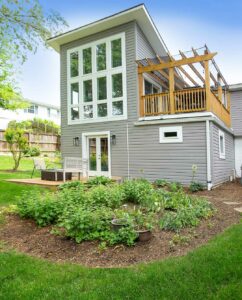
- Our second story home addition in Fairfax, VA shows how the layout was intentionally designed to adapt as the homeowners’ needs changed, demonstrating how home additions can be both beautiful and forward-thinking.
Design Your Home for Aging in Place—Even if it Feels Early
Many homeowners hesitate to think about aging-in-place features, especially if they feel those needs are far off. However, integrating accessibility early is one of the smartest long-term decisions in aging-in-place home design. Features like wider doorways, minimal level changes and accessible bathrooms can be seamlessly incorporated without compromising aesthetics.
Thoughtful stair placement and structural planning also play a significant role. Designing staircases that can later accommodate lifts, or planning for main-floor living options, adds future flexibility without drawing attention to accessibility features today.
These choices don’t just enhance personal comfort; they also increase resale value. Homes that support a wide range of mobility needs appeal to a broader audience, especially in competitive Northern Virginia markets.
As Nina explains, “Clients are often surprised by how seamlessly accessibility features can be integrated into beautiful design.”
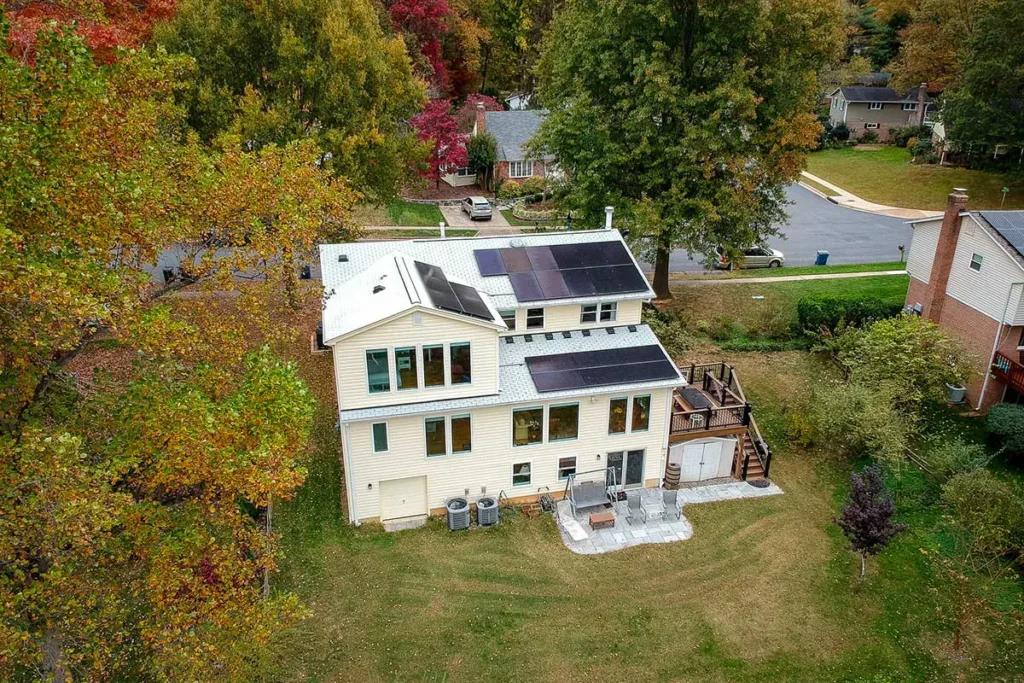
- Our three-story addition designed for accessibility in Fairfax, VA highlights how forward-looking design can support independence, comfort and elegance across every stage of life.
Future-Proof Your Home Addition, Not Just Your Floor Plan
True long-term planning extends beyond layout and aesthetics. Mechanical, electrical and plumbing systems play a role in how well a home addition adapts over time. Underestimating these elements can limit future upgrades and increase costs.
Electrical capacity should account for evolving technology, from smart home systems to home offices and electric vehicle charging. HVAC zoning ensures that additions remain comfortable even as their function changes, preventing energy inefficiencies. Similarly, planning plumbing locations for potential future bathrooms, wet bars or laundry spaces allows for expansion without invasive work. These behind-the-scenes decisions are often the hardest—and most expensive—to change in the future. A design build home addition approach ensures these systems are integrated cohesively from the start.
As Andrew explains, “Mechanical and electrical planning is where long-term thinking really pays off. Those decisions are much harder to change later.”
Design Your Home Addition to Blend Seamlessly With Your Existing Home
A well-designed addition should feel like a natural extension of your home, not an afterthought. Achieving this requires careful attention to architectural rhythm, scale and flow. Matching rooflines, window proportions and exterior materials helps the addition feel cohesive inside and out.
Interior harmony is just as important. Sightlines, ceiling heights and transitions between old and new spaces should feel intentional. Using consistent materials, or thoughtfully complementary ones, creates visual continuity that supports long-term satisfaction.
As Nina says, “A successful addition should feel like it was always meant to be there.”

- Our universal-design kitchen remodel and first-floor addition in Falls Church, VA showcases how seamless integration enhances both function and aesthetics over time.
Why a Design Build Home Addition is the Smartest Choice for NoVa Homeowners
Long-range planning leads to fewer renovations, less disruption and a stronger return on investment. A design-build home addition model supports this approach by aligning vision, design and construction under one integrated team. This collaboration minimizes miscommunication and ensures that long-term goals guide every decision.
For Northern Virginia homeowners, working with a design build firm also means navigating zoning, permitting and structural complexity with confidence. The team approach encourages homeowners to think beyond immediate needs and invest in spaces that support every season of life—today and decades from now.
Homeowners exploring addition ideas may also find inspiration in Schroeder Design Build’s resources on top home addition design trends and before-and-after home additions, which highlight how thoughtful planning transforms homes across Northern Virginia.
Choose Schroeder Design Build for Your Home Addition in NoVa
The year 2026 marks the 40th anniversary of Schroeder Design Build’s commitment to helping homeowners throughout Northern Virginia reimagine what’s possible within the homes they love. Our legacy as a remodeling contractor is rooted in thoughtful planning, enduring craftsmanship and a deep understanding of how families grow and change over time. Every project reflects our commitment to creating spaces that are not only beautiful today, but functional and adaptable for decades to come.
Choosing Schroeder Design Build means partnering with a team that takes the long view. We listen carefully, design intentionally and build with purpose. If you’re planning a home addition in Northern VA, you can trust our four decades of experience, our collaborative design build process, and our proven ability to create additions that truly grow with you.
Contact us to schedule your exploratory consultation.
For more inspiration, subscribe to our newsletter.